
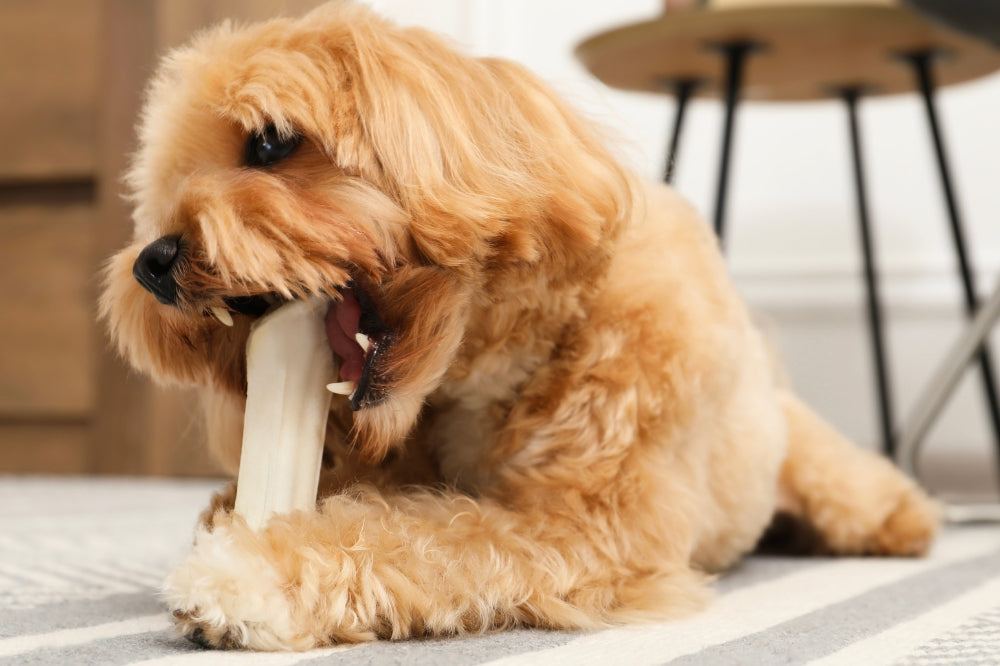
While many dogs happily share their toys, food or favourite resting spots, others can become defensive when they feel something valuable is being taken away. This behaviour, often called resource guarding, can be worrying for owners and potentially dangerous if not addressed properly. So, why does it happen and what can you do about it? Let’s take a closer look.
What is resource guarding in dogs?
Resource guarding, sometimes referred to as possessive aggression, occurs when a dog becomes protective over something they consider valuable. This “resource” could be food, treats, toys, a bed, a bone or even a favourite person.
Dogs displaying possessive behaviour will likely growl, snap, stiffen their body or show their teeth when someone approaches the item they’re guarding. In more severe cases, they may bite in an attempt to protect their “resource”.
It’s important to understand that this behaviour is usually driven by fear or insecurity rather than dominance or stubbornness.
Why do dogs guard resources?
At its core, resource guarding is a natural survival behaviour. In the wild, animals that protected valuable resources (such as food) were more likely to survive. However, in a home environment, this instinct can become problematic if it escalates.
Some common reasons dogs develop resource guarding include:
Competition in early life
Puppies raised in large litters or competitive environments may learn to protect their food early.
Past experiences
Dogs that previously experienced food scarcity or had items frequently taken away can feel the need to guard what they have.
Anxiety or insecurity
Dogs that feel uncertain or stressed may guard resources more intensely.
Learned behaviour
If a dog learns that growling makes people back away, the behaviour becomes reinforced.
What are the warning signs?
Dogs rarely bite without warning. In most cases, they show a series of escalating signals. Early warning signs usually include:
- Freezing or becoming stiff
- Eating faster when someone approaches
- Hovering over a toy or bowl
- Side-eyeing (sometimes called “whale eye”)
More serious warning signs include:
- Growling
- Snapping or lunging
- Baring teeth
- Biting
Growling is actually an important communication signal. Punishing a dog for growling may remove the warning but not the underlying discomfort, which can increase the risk of sudden bites.
How can you manage resource guarding?
Management focuses on preventing conflict while helping your dog learn that someone coming near their food, toys or other valued items isn’t a threat. Instead, it should become something they associate with good things, like treats or praise. Here are some helpful strategies:
Avoid taking items by force
Never try to wrestle objects away from your dog. This can increase anxiety and make guarding more intense.
Practise trading
Teach your dog that giving up an item results in something better. For example, offer a high-value treat in exchange for a toy. Over time, your dog learns when someone comes near their toys, it leads to something positive rather than having the item taken away.
Feed in a quiet space
Dogs that guard food may feel more comfortable eating in a calm, separate area where they won’t be disturbed.
Teach “drop it” and “leave it”
These cues can help prevent situations where your dog feels the need to guard an object in the first place.
Supervise around children
Children may not recognise warning signals in dogs. Always supervise interactions and teach children not to approach a dog while it’s eating or chewing a bone.
If your dog has already snapped or bitten, or if the behaviour is escalating, it’s best to consult a qualified dog behaviourist. Professional guidance can help identify the underlying cause and develop a safe training plan tailored to your dog. Never attempt aggressive confrontational training methods - these can increase fear and worsen the behaviour.


Leave a comment
This site is protected by hCaptcha and the hCaptcha Privacy Policy and Terms of Service apply.